BFR Training Isn't Just for Elite Athletes
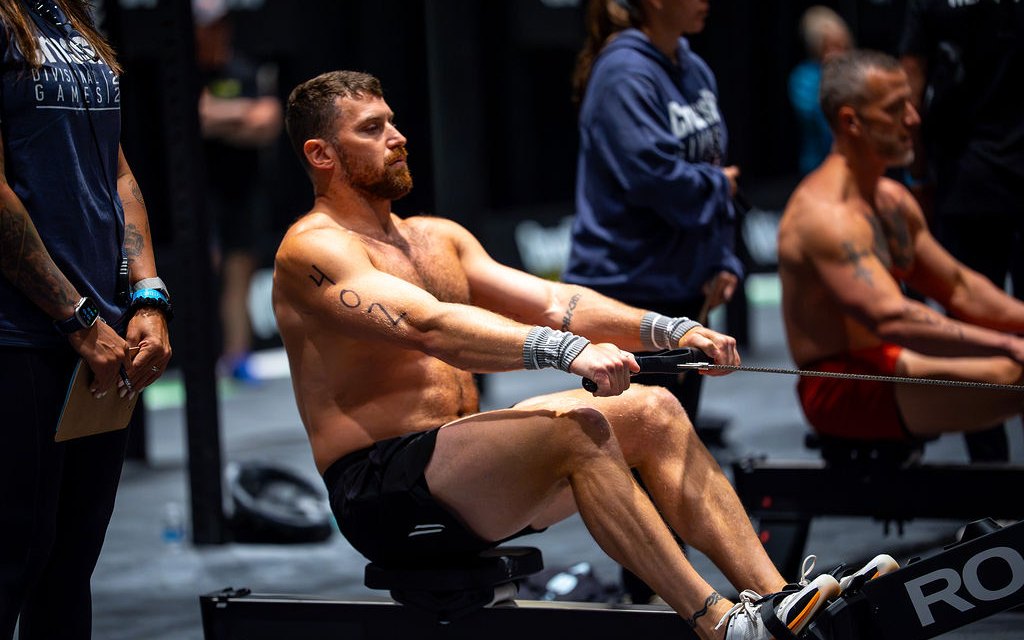
"There isn't one single population where I'm like, it's only if you've reached the semifinal CrossFit level that you've earned BFR. It's just another tool like a barbell or a leg extension machine."
That's my biggest gripe with how blood flow restriction training gets taught. Coaches who use BFR with performance athletes keep telling people it's an advanced tool, only for elite athletes. Ryne Sullivan asked me to explain that on episode 11, and we spent the rest of the hour on how I use BFR: safety, cuffs, endurance work, strength work and ischemic preconditioning.
Who BFR is for
The research on BFR keeps showing that it lets people make strength and hypertrophy gains at lighter loads and lower volumes. Most of the exercising population isn't particularly strong and doesn't carry enough muscle mass, so a tool that shortens the time to build those adaptations shouldn't be locked behind a Games invite. BFR started in Japan as KAATSU, and some of the early work was BFR walking in older adults, who gained muscle size and strength from it.
I use BFR with everyone from 55 to 60+ masters athletes to CrossFit Games athletes, and personal trainers working with the general population could use it too, once their clients are screened and cleared. Rehab is outside my scope: once an athlete is cleared by their doctor and PT to use BFR for training, I'm all in. Before that, the only thing I'll have them do is IPC.
Screen first, then get the cuff right
Everyone goes through a full screen first, much like the one you're supposed to do before starting intense exercise. The risk factors include a family history of deep vein thrombosis, clotting issues, stroke and blood pressure issues, and that isn't the full list. Every Bluetooth cuff (Saga, SmartCuffs, Suji) has you fill out a screening questionnaire before your first session. Then three things about the cuff matter most.
Placement. The cuff goes as proximal as you can get it: on the arm, right in the dip between the shoulder and the bicep; on the leg, worked as high up into the groin as you can. I've seen people who teach BFR put cuffs just above the elbow for grip work, or on the calf. "The closer you get to your hands and the closer you get to your feet, the shallower the nerves are," I said. "And so you dramatically increase the risk of what's called nerve crush injury."
One bladder. You want a single bladder cuff, with one inflatable bladder running the whole length. Multi-chamber cuffs, with separate bladders that inflate on their own, don't create enough pressure to occlude. People using them end up driving the pressure insanely high to compensate, which brings the nerve risk back in.
Width. The wider the cuff, the lower the pressure needed to occlude. Look for a cuff over three inches wide, on the arms too. Ryne asked whether a wide cuff restricts upper body movement. You're going to restrict it with pressure or with width, and I'll take width.
Most of what I know about cuffs comes from my friend Dr. Nick Rolnick, who often publishes the rebuttal when a new BFR study used multi-bladder cuffs or didn't set pressure relative to limb occlusion pressure (LOP).
BFR guardrails I use with every athlete
Screen first, every athlete
Cuff as proximal as possible, single bladder, over 3 inches wide
~15min total inflated time for strength and hypertrophy work
Up to ~20min for endurance work
Numbness or tingling: deflate, take the cuffs off, move on
That cap is total inflated time. Six minutes of back squat sets plus six of lunges is 12 minutes, and that's probably the end of BFR work for the day. Done right, it might be the end of your session. And you're not chasing numbness. "You do not want numbness and tingling, because that's more of a sign of nerve compression than it is from actual blood flow restriction." Color change is expected. I've seen legs turn purple.
Inflated through the rest
For strength work, I keep the cuffs inflated during the rest periods. I've also had very endurance-biased athletes who needed strength lift heavy with the cuffs deflated during the sets and inflated only during the rest. Within a few sessions they told me they preferred resting with the cuffs on to resting passively. In the research, 19 trained men who inflated only during the rests gained about as much strength and muscle thickness as the group who kept the cuffs on the whole time.
Physiology first, performance later
Years ago Nick told me the BFR studies showed better VO2 max, lactate kinetics and capillary density, but not better performance. That made sense to me.
"As a coach, I use my off-season, my limiter phase, to address physiology. And then we do our performance phases to take that enhanced physiology and turn it into performance improvement."
What's missing from most BFR research is periodization. Replace normal training with eight weeks of slow riding in cuffs, then run a 10K time trial, and of course the athletes didn't get faster.
My favorite study does it the other way. World-class rowers took a four-week off-season block with very little intense work and added two 10-minute bouts of BFR rowing at a zone 2 effort (about 2 mmol of lactate), 11 BFR sessions in total. Their 2,000 m erg times dropped by about 4.5 seconds, in the women and the men. For world-class rowers, that's a big change in four weeks, let alone four weeks of mostly easy rowing. The authors wrote that the improvement was "greater than what is typical for this population." I've now run the same idea with mountain bikers, CrossFitters and HYROX athletes.
BFR endurance work
I've used BFR on every erg. Running is the exception, because the cuffs change your gait pattern too much. For the upper body, BFR ski work is one of my favorite ways to build endurance in athletes who didn't swim or do gymnastics growing up, the ones who struggle with high volume handstand push-ups and pulling.
BFR ski for upper body endurance
2 x 10:00 ski
Cuffs at 30-40% on the arms
BFR bike erg
2 x 10:00 at a zone 2 effort
Cuffs at 55-60%
Damper 3-4
Raise the pressure slightly over the weeks and let the watts climb
For an athlete training for the Leadville 100 mountain bike race, we ran the 2 x 10 for six weeks, then moved to what we called BFR torque work: the same piece at damper 10, because on those climbs he had to stay seated. There's no research on it. By his peaking phase we were at 4 x 10:00 with 5:00 rest.
With CrossFitters, I use BFR in the rest between intervals:
Post-interval BFR on the Echo bike
0:30 faster than 10min test pace, then inflate cuffs and rest 2:00
Deflate before the next interval
Progress the work: 0:30 --> 1:00 --> 1:30 --> 2:00
End point: 2:00 at 10min test pace, 2:00 cuffed rest, alternating
For these athletes, that has improved the 10-minute test more than 2 on, 2 off without the cuffs. Ryne's read was that you're trapping the metabolites in the leg. That's how I like to think about it, though I'm not sure it works exactly like that physiologically, and when you deflate before the next interval, blood and oxygen rush back into the limb.
Why hypertrophy without capillaries makes CrossFitters fail faster
When you deflate a cuff, the rush of blood back into the limb creates shear stress on the capillaries, which tells the body to grow more of them, whether it was BFR strength, hypertrophy or endurance work. Capillaries deliver blood to the muscle and clear the metabolites.
Ryne asked what happens on the competition floor when an athlete gains muscle without the capillaries to match. "You're getting less oxygen into the tissue because there's fewer capillaries, there's a smaller amount of blood supply to a bigger amount of tissue. And so as a result, you fatigue faster." For some athletes that shows up as a pump, for some it's burning, and for some it's just local muscular failure.
That's why, when a CrossFitter's triceps always fail, classic hypertrophy work is almost always the wrong answer. "Doing classic hypertrophy work increases fiber thickness, but doesn't increase the capillary density alongside to the same degree." BFR hypertrophy or BFR endurance work is a better option for that athlete. Even if they put on some size, they're likely to get more capillary density along with it.
Ischemic preconditioning
Ischemic preconditioning (IPC) is passive. You inflate the cuffs to 100% of your occlusion pressure, enough to stop all blood flow in and out of the limb, sit for five minutes, then deflate completely. On my Moxy monitor, muscle oxygen in my quad drops to zero around four and a half minutes in, a similar environment to a max sprint without any exercise.
IPC
3 x 5:00 cuffs at 100% LOP, seated
Deflate fully between bouts
Before training, both limbs
Done consistently, it reduces soreness, cuts the basic part of the warm-up because each release flushes blood into the limb, and protects against the damage from dense, repeated contractions, like 200 wall balls unbroken. For athletes whose forearms pump out on rope climbs (once technique is ruled out), upper body IPC before the session has pretty consistently delayed the pump.
Ryne's use case is race morning. Two to three minutes at around marathon pace, three times, opens up his legs and his breathing, but "if I'm about to go run a marathon or a half marathon, I don't want to put four extra kilometers on my legs prior to the race."
Then he pushed back: "When we're training, at times do we not want that muscle damage to happen for the athlete so that they become more volume tolerant and able to handle a wider workload?"
When I first released my BFR series, my answer was that we didn't know. Not long after, a study came out where the group that used IPC before training did more reps and made better gains, because they could do more volume. "We often think about muscle damage as something that's a requirement for adaptation, but the reality is it's the volume of sports specific load at joint angles and speeds. That's what's driving the adaptation, not the fatigue."
I had the same worry about sodium bicarbonate when Andre Houdet was using it before certain sessions: would buffering the acidity blunt his adaptation? The research on chronic bicarb during interval training showed the opposite. Ryne's warning if you try it: be careful with your digestive system, because a wrong dose on race day shows up when it's too late.
IPC doesn't count toward my cuff time limits. Studies have repeated it several times a day, and I do it as often as I can remember whenever I have a strain injury.
How I bring an athlete onto BFR
I start everyone on the lowest risk protocols. For an athlete starting a strength cycle, the on-ramp takes about six weeks.
BFR on-ramp for a strength cycle
Weeks 1-2: IPC before strength sessions
Weeks 3-4: add 2 x 10:00 BFR bike erg at ~50%
Then: BFR finishers (goblet squat --> front squat, or lunges)
The lunge finisher is a protocol Ryne and I built for George Crewe years ago, and I now use it with a lot of CrossFitters and HYROX athletes. Athletes with a lot of experience can end up at 50 front squats at 50% of their 1RM, in sets of AMRAP minus one with 90 seconds rest and the cuffs at 70%. It's brutal.
Strength work at light loads
How light you can go depends on the athlete. Novices make strength and hypertrophy gains from unloaded air squats at moderate to high pressure in the classic 30-15-15-15. With athletes who have five to ten years of CrossFit, I see strength benefits at 30 to 45% of 1RM.
BFR strength for experienced athletes
3-4 x AMRAP-1 or AMRAP-2 @ 30-45% 1RM
Cuffs stay inflated through the rest
I auto-regulate the reps because everyone responds differently. At 45% of my front squat 1RM, I'm close to failure around 12 or 13 reps in my first set and about eight in my last. Alexis might do 24 in the first and 18 in the last.
I've found BFR super beneficial for athletes with back issues. A masters 45-49 athlete of mine whose back hurt every time we loaded him heavy came off two back-to-back six-week blocks of BFR back squat, then front squat. His back feels great, he's squatting what he did before the cycle, and he told me, "man, I feel really good in the 10 to 12 rep range now."
Ryne's point: "If you're in elbow pain every time you snatch, or your shoulder hurts every time you jerk, or your back hurts every time you pull off the floor, it's just a matter of time before we need to take four to six weeks completely off of the thing."
"I think if you're an athlete who can lift heavy, lift heavy. You probably don't need it. But at some point, something's gonna happen." When it does, BFR keeps the muscle on. An athlete who can only do leg extensions while their back heals does BFR leg extensions, and their legs are still strong when they get back to squatting.
The same goes for the off-season. Every season I'm moving a little more toward starting athletes with BFR as their base work coming out of semifinals: BFR is the primary work for the first three weeks, then it becomes assistance while the barbell loads come back up.
Sport-specific work
Ryne asked about wall balls and thrusters. "If you can do it in the sport, I've probably tried it." Most of it doesn't work: the bar hits the cuffs on cleans and snatches, and burpees deflate them. I do use it for handstand push-ups, off-season sled work for HYROX athletes, lunges and grip work. "I would steer people away from trying to use it as a sport specific tool and think of it more as a tool for building physiology to support the sport specific work on top of it."
Manual or Bluetooth cuffs
I learned on manual cuffs, and personally I hate Bluetooth cuffs. Inflate a manual cuff to 200 mmHg, do a set of squats, and you'll often come back to 180 because the squeeze pushed fluid out from under the cuff. So you inflate to target, flex as intensely as you can, relax and re-inflate, which is awkward with a Bluetooth cuff. But if you're not going to learn to find LOP yourself, a Bluetooth cuff measures it for you.
"If you want to have control over it, then you get the manual, you get the stick shift. And if you just want to use it as a daily driver, then you get the automatic Bluetooth cuffs."
Referenced in this episode
- Dr. Nick Rolnick and The BFR PROs. BFR researcher and educator. Instagram @thebfrpros and @thehpm.
- Multi-chamber cuffs. Rolnick N. "Unpacking the blood flow restriction device features literature: multi-chambered bladder design." Frontiers in Sports and Active Living, 2024. doi:10.3389/fspor.2024.1457539
- What sits under the cuff. Rolnick N, Kimbrell K, de Queiros V. "Beneath the cuff: often overlooked and under-reported blood flow restriction device features and their potential impact on practice." Frontiers in Physiology, 2023. doi:10.3389/fphys.2023.1089065
- Cuff width. Wider tourniquet cuffs occlude at lower pressures. Crenshaw AG et al. Acta Orthopaedica Scandinavica, 1988;59:447-451. doi:10.3109/17453678809149401
- Cuff placement and setup. Patterson SD et al. "Blood flow restriction exercise: considerations of methodology, application, and safety." Frontiers in Physiology, 2019;10:533. Recommends the most proximal part of the limb and pressure set as a % of LOP. doi:10.3389/fphys.2019.00533
- Cuffs inflated only during rest. 19 trained men, leg press 30-15-15-15 at 20% 1RM, 2x per week for 6 weeks. Inflating only in the rest periods matched continuous BFR for 1RM (+8.5% vs +9.3%) and muscle thickness, with less pain. Schwiete C et al. Frontiers in Physiology, 2021. doi:10.3389/fphys.2021.663665
- BFR rowing in world-class rowers. 11 sessions of 2 x 10min BFR rowing at
2 mmol/L lactate over 4 weeks of off-season training. 2,000 m time trial improved ~1.1% in both women (4.6 s) and men (~4.5 s), more than is typical for this population. Thompson KMA, Pethick WA, Clarke J, et al. "Blood flow-restricted training and time trial performance: a cohort study of world-class rowers." Medicine & Science in Sports & Exercise, 2024;56(9):1606-1614. doi:10.1249/MSS.0000000000003459 - BFR rowing and VO2 max. 31 rowers, 2 x 10min of low-intensity BFR rowing, 3x per week for 5 weeks on top of normal training. VO2 max +9.1% vs +2.5% in controls. Held S, Behringer M, Donath L. Journal of Science and Medicine in Sport, 2020;23:304-308. doi:10.1016/j.jsams.2019.10.002
- BFR and capillaries. Low-load BFR knee extension raised capillaries per muscle fiber by ~21-24% in under three weeks. Nielsen JL et al. Frontiers in Physiology, 2020. doi:10.3389/fphys.2020.00556
- IPC and muscle damage. A 2024 meta-analysis found IPC before exercise reduced soreness. de França et al. Muscles, Ligaments and Tendons Journal, 2024. doi:10.32098/mltj.01.2024.09
- IPC before resistance training. 16 trained men, IPC before knee extension to failure, 2x per week for 6 weeks: more reps per session and bigger 1RM gains. Carvalho L et al. Journal of Sports Medicine and Physical Fitness, 2020;60:1431-1436. doi:10.23736/S0022-4707.20.11032-6
- Chronic sodium bicarbonate during interval training. 8 weeks of cycle intervals with bicarb before each session: bigger gains in lactate threshold and time to fatigue than placebo. Edge J, Bishop D, Goodman C. Journal of Applied Physiology, 2006;101:918-925. doi:10.1152/japplphysiol.01534.2005
- KAATSU walking in older adults. 6 weeks of BFR walking in adults aged 60-78 increased thigh muscle size and strength. Abe T et al. Journal of Geriatric Physical Therapy, 2010;33:34-40. doi:10.1097/JPT.0b013e3181d07a73
- Last week's episode. The First Things We Change in a New Athlete's Program
I'm putting up the BFR protocols I use inside Ruth Performance Collective, and this Tuesday the fatigue series continues with week two, perceived fatigue, with Jeremy Meredith.
- Kyle