Are There Best Practices for Coaching Functional Fitness Competitors?
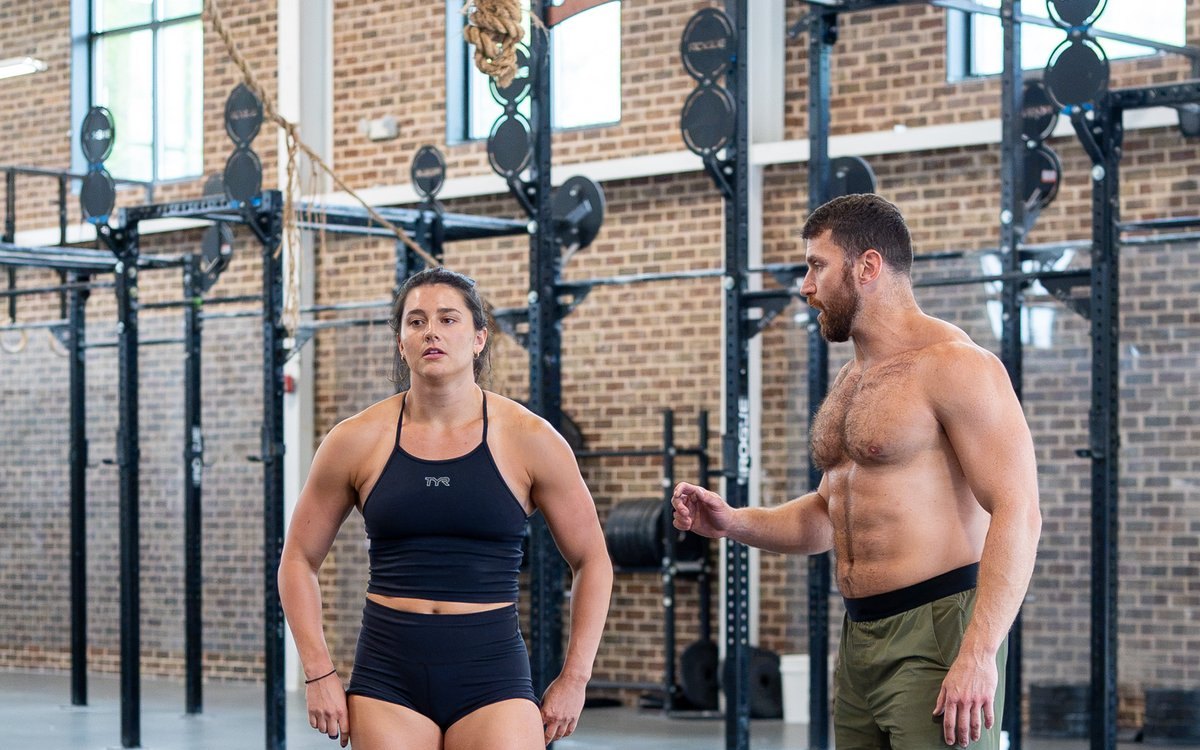
On two recent podcasts, I was asked whether we are getting close to finding best practices for coaching competitive functional fitness athletes.
My answer was that we are still pretty far away. At least, we are really far away from the kind of answer people usually want, some unifying principle or single programming model, that consistently produces elite CrossFit athletes.
The sport resists the development of best practices by constantly changing, and the anti-science stance that was pervasive in the community for years only compounded the problem. As a result, we are still figuring out how to develop all of its competing qualities together. Further compounding the problem, borrowing methods from running, weightlifting, gymnastics, or traditional strength and conditioning does not automatically transfer to competitive fitness.
That uncertainty is part of what makes coaching the sport interesting. It is also what makes simple answers so difficult to arrive at. But I have been thinking about my response, and it needs some clarification. We may not have established best practices for exactly how to produce the fittest athlete on Earth, but there are still good coaching principles that at least maximize our chances of guiding an athlete in the right direction.
Best practices do exist at the level of the coaching process
A coach should understand what the athlete’s goal requires. We now have years of data to analyze and model competitive demands. A coach should assess where the athlete currently sits relative to those demands, identify the limitations that matter most, and establish clear priorities.
The program should create real opportunities to develop those priorities, not simply include them somewhere randomly in the week. Finally, the coach should use the athlete’s responses and feedback to determine what happens next.
In simple terms:
- Understand the demands.
- Assess the athlete against them.
- Identify the highest-value priorities.
- Build training that gives those priorities room to improve.
- Monitor whether the intended adaptation is actually occurring.
- Adjust the plan based on the response.
We can disagree about which strength progression to use while still agreeing that a coach should be able to explain why that type of strength training is in the program.
A priority on paper is not always a priority in practice
Imagine that you identify strict HSPU as a major limitation for an athlete preparing for a qualifier. You put them in the program twice per week. On paper, you have increased the frequency of the priority. However, every exposure occurs inside a metcon, or after other upper-body work. As a result, the athlete spends most of those sessions grinding away through small sets.
You identified a priority and you increased exposure to the movement, but did you actually create better opportunities to develop it? Frequency and volume alone are not always the solution to improving limiters.
The next step is to determine what actually limits the athlete.
- Do they lack strength off the floor?
- Do they struggle to finish the rep at lockout?
- Can they perform a big set while fresh but struggle with repeat capacity?
- Does their position deteriorate as fatigue and the upper-body pump accumulate?
- Is the primary limitation strength, local muscular endurance, movement efficiency, or some combination of the three?
Those answers should lead to different training priorities and different programs.
If the athlete lacks strength in the bottom, weighted or deficit handstand push-ups may be appropriate. If lockout is the primary limitation, band-resisted handstand push-ups may be a better option because the band resistance increases as the athlete approaches the top.
If on the other hand, the athlete has sufficient strength but cannot repeat quality sets, the problem may require a different dose, rest structure, or progression entirely. Now you have a reason behind the method, and can drive progress in the thing that actually limits the athlete.
Most priorities require space to improve
If strength is the limitation, dedicated HSPU work may need to occur early in the session while the athlete is fresh. That could also mean reducing other pressing volume or changing the previous day’s training so the athlete does not enter every important exposure with fatigued shoulders and triceps.
The coach then needs to evaluate whether the athlete is getting stronger in the position being targeted and whether that improvement transfers to HSPU as they appear in the sport. This is where programming becomes more than exercise selection.
The order, dose, context, and progression of the work all influence what the athlete can get from it. Additionally, progressing a priority almost always requires a tradeoff. Something else has to receive less time, volume, or recovery so that this quality has a better chance to improve. This is why periodization is critical for competitive athletes.
The priorities should be clear in training
This leads to one of the clearest best practices I can currently offer: the priorities we identify should actually show up in our clients’ programs.
The audit for this is really simple: look at one athlete’s current week.
- Could another coach identify what you are trying to improve?
- Could you explain how the exercise selection, session order, weekly dose, and progression support that goal?
- Do you have a way to tell if your progressions are working?
If the stated priority is buried under unrelated fatigue, exposed only in the chaotic conditions of a metcon, or never tested frequently enough to guide the next decision, then you’re leaving your athletes’ progression to random chance.
Better decisions drive better progress
We still have a long way to go before anyone can claim to know the best way to develop an elite CrossFit athlete. The sport is not fixed. The competitive demands evolve. Athletes arrive with different training histories, structures, strengths, weaknesses, and rates of adaptation. Experience has shown that even the best plan on paper can fail in the chaos of real life.
It is likely that the complexity of human adaptation may mean there is never one universal performance blueprint. However, as a community of coaches, we can build better standards for the decisions we use to create our athletes’ plans.
We can assess more carefully, define limitations more precisely, protect their priorities more strictly, and use better testing to evaluate whether our methods are producing the adaptation we intended.
The methods will continue to evolve, but good coaching principles exist now.
- Kyle