Is Fatigue Necessary for Adaptation?
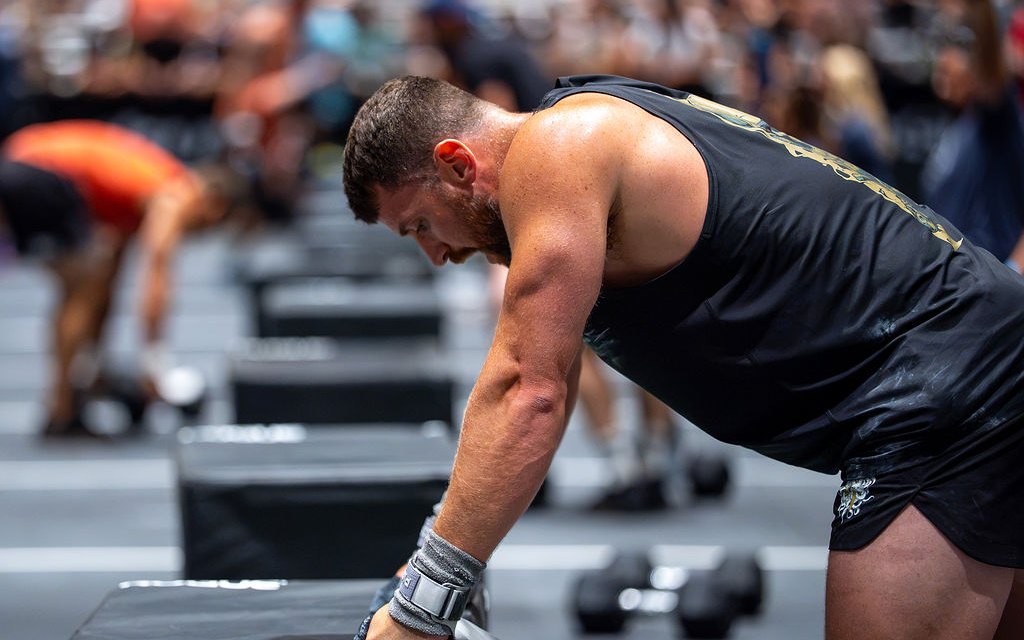
On a recent Ruth Performance Collective call, the central question was: is fatigue necessary for adaptation? It's a loaded question, and the answer is it really depends. In coaching in general, there's this idea that hard training is better, and we are in a sport where the testing almost always feels hard.
From my perspective, fatigue has two primary jobs. The first is that it's a way to monitor training load, the big picture fatigue we can see and measure across a training week. But it is also a tool, a lever that we can pull inside of a training session. Fatigue isn't good or bad. The important thing to ask is whether fatigue is actually going to contribute to the target adaptation, or whether it's just going to reduce the quality of work across the sets.
When fatigue is a cost
A training stimulus has to challenge an athlete's current capacity. You have to take someone out to the edges of their capacity in order to develop something. However, that does not mean that every session has to produce large performance losses, drive failure, create soreness or create long-term performance degradation. Those are sometimes the consequences of poor program design.
When an adaptation depends on high force production, speed, power or precision, accumulating fatigue generally lowers the quality of the adaptation. Each subsequent rep or bout is a little worse than the previous one, the output drops and the adaptation drops. A lot of times we look at training through the lens of "Did we make someone tired?" But being tired is not the same as driving an adaptation.
If you look at what drives adaptation for each training quality, you’ll notice fatigue isn’t on the list:
| Quality | What drives the adaptation |
|---|---|
| Speed, power and rate of force development | Maximal intent and high movement velocity |
| Strength | High force production and technical proficiency |
| Skill acquisition | High quality repetition of the target movement pattern |
| Muscular endurance | Quality volume before output loss |
| Aerobic development | Time accumulated at your target oxygen demand |
Build it, then express it
You're always going to express muscular endurance under fatigue. If you tell someone to do a max rep set of strict handstand push-ups, or a 5-minute AMRAP of strict handstand push-ups, they're going to be challenged to maintain force and speed as fatigue accumulates. However, testing max rep strict handstand push-ups in 5 minutes is not what develops their ability to do more reps in 5 minutes.
The same thing is true for anaerobic endurance. If we want to improve someone's 1-minute max calorie Echo, we're not going to test it over and over. We're going to do repeated bouts of ~30 seconds at that target work rate with enough rest that it can be repeated over and over, and accumulating that time over the course of weeks creates the adaptation. You don't do a HYROX repeatedly to get better at HYROX either. You do training that pushes up the athlete's lactate threshold by spending time at the target demand.
This is essentially how most coaches try to improve muscular endurance: they have athletes do sets of AMRAP-1 stopping just short of failure. Even if you have the athlete hit repeated sets of AMRAP-1, that’s just testing their max over and over. That's expression, not training.
There are two exceptions where fatigue is necessary to drive improvement. Hypertrophy requires proximity to failure, because you have to go close to failure to create the mechanical tension that drives it. For CrossFit athletes, competition fatigue tolerance (your ability to maintain pace, skill and decision-making when fatigue is climbing) is a requirement for the sport. The best analogy I've got is that training with low fatigue raises the performance ceiling, and competition tolerance is what allows you to express up to that ceiling. They sit on two opposite ends of the fatigue curve.
The cutoff decides what the set builds
Inside a session, fatigue shows up as falling output and shrinking reserve. For strength and gymnastics work, the most common ways to measure it are velocity loss (from the first rep to the last rep in the set) and reps in reserve.
When we're training for speed and power, the goal is to remove fatigue, so we stop at ~10% velocity loss. A lot of the research shows ~10-20% is optimal for strength, and 30-40% for hypertrophy (at 65% of 1RM, 40% velocity loss leaves ~2 reps in reserve). The most common strength prescription is 5 x 5 @ 80%, and we arrived at that because it captures about a 20% velocity loss for most athletes.
In one study, two groups followed the same 8 weeks of back squats, 2x per week at 70-85%, and the only difference was the velocity cutoff (Pareja-Blanco et al., 2017). The 20% velocity loss group did 186 total reps. The 40% group did 311, almost double. But the group that did less work had greater strength gains (18% vs 13.4% in 1RM back squat) and much greater improvements in countermovement jump (9.5% vs 3.5%). The 40% group built more quad size, but they lost type IIX (the fastest) fibers and had reduced power adaptations.
There is a pull-up study that I think is most applicable for CrossFitters (Sánchez-Moreno et al., 2020). Trained men averaging 16 strict pull-ups (pretty dang fit!) did 8 weeks, 2 sessions per week, stopping at either 25% or 50% velocity loss. The 25% group did 363 reps, the 50% group did 556. Max reps: no difference. Strength and speed: much greater gains in the 25% group. Similar research on back squats and grip strength keeps showing the same thing: taking muscular endurance sets close to failure results in no extra muscular endurance adaptation, and less strength and power.
It also carries into the rest of the session. Take 75% for 3 x 10 to failure, and vertical jump height takes 72 hours to return to baseline. Do the same 30 reps as 6 x 5 at 75% leaving 5 in the tank, and it takes 6 hours (Morán-Navarro et al., 2017). If an athlete also needs to get faster and more powerful, you've created fatigue that prevents them from expressing any of that well for days with the to-failure format.
Save suffering for metcons
Fatigue still has a job. Your athletes need to hold pace, skill and decision-making when it's climbing, and that's what competition prep is for. But training with low fatigue raises the performance ceiling, and fatigue tolerance is what lets you express up to it. If every session is a test, you never raise the ceiling.
Before you write the next block, look at one strength, gymnastics or interval piece you programmed this week and ask:
- Is fatigue the stimulus here, or is it going to blunt the stimulus?
- Where does the set stop?
- Is this building the quality, or testing it?
-Kyle
Sources
Pareja-Blanco F, et al. (2017). Effects of velocity loss during resistance training on athletic performance, strength gains and muscle adaptations. Scand J Med Sci Sports 27(7):724-735.
Sánchez-Moreno M, et al. (2020). Effects of velocity loss during body mass prone-grip pull-up training on strength and endurance performance. J Strength Cond Res 34(4):911-917.
Morán-Navarro R, et al. (2017). Time course of recovery following resistance training leading or not to failure. Eur J Appl Physiol 117:2387-2399.