The Less Time You Have, the More Specific Your Training Has to Be
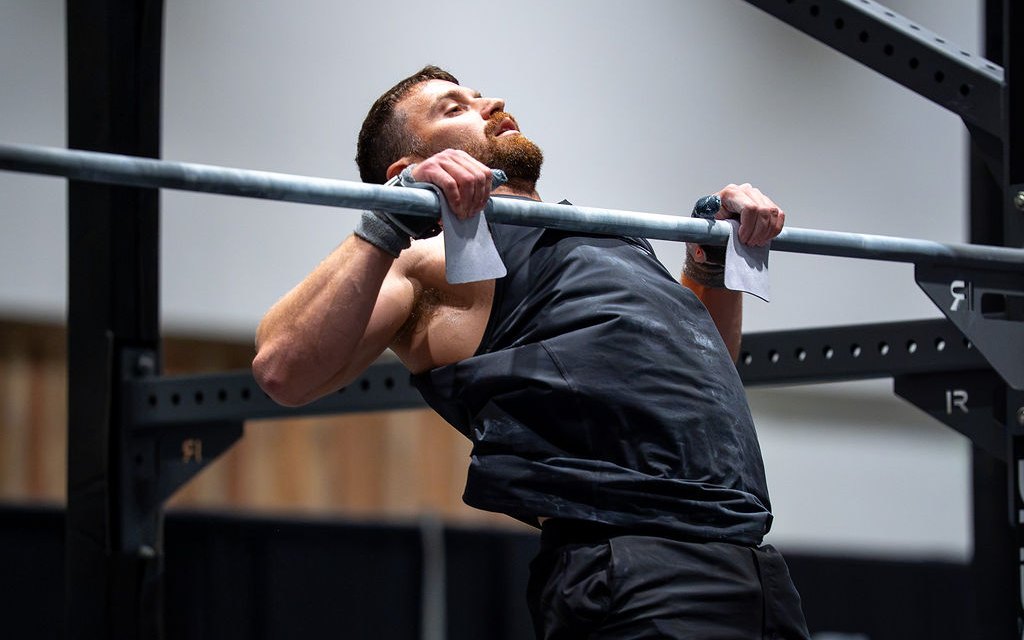
"The less time you have, the more specificity is required. The more time you have, the more you can broaden what you're doing."
A lot of my clients are going through periods where they train less than they used to: a first kid, a second kid, a job change. So I've been thinking through my process for that athlete. "What is my process for somebody who goes from having two 90 minute sessions in a day to having 60 minutes to train, but they still want to be able to be competitive? They don't want to just go do class workouts. They want to train like an athlete."
Ryne Sullivan and I spent episode 12 on what changes when that athlete gets five 60-minute sessions a week.
The advantage of a high training age
Ryne had to condense his sessions in college, between practice and a full course load, and at 21 his warm-up was eight to ten minutes, tops. At 41, I can't skip my warm-up. But older athletes have an edge here. "If you've been doing your sport or your task for a really long time, a lot of times volume isn't the thing that you need, because you don't need the skill acquisition components of it."
So the job is to be ruthless about priorities and remove the things that don't matter much. My warm-ups used to be a long stretch of foam rolling and mobility work because I had the time. Now: "Prep for the stuff you're about to do. You have five minutes, set a five minute timer, get that done and get into the session."
Protect the hour
Ryne starts with boundaries. Pick the hour that works (with a five and a nine year old, that might be 5:45 AM while your spouse has the kids until seven), put the phone on a gym focus, and write the session out on paper "so that I'm not constantly checking my phone, getting notifications, spiraling into text messaging that bleeds a lot of time."
I do the same thing with a mini whiteboard in my garage. I take the extra three minutes to write the whole session out instead of going back to CoachRX between sets, and my phone stays on my VBT app. Writing it down also catches what you missed the first time you read the session, like the fact that it was five sets.
Then decide what the session is for. You can pack a lot into an hour. "Sometimes one piece of training needs to be protected from fatigue." Name the most important piece of the day, and make sure it gets done with the quality it needs.
Fewer priorities, and your strengths go in the metcons
"If you're a CrossFitter and it's something that you're good at, it just goes in metcons, it goes in conditioning. You don't do skill work for stuff you're good at when you have limited training time."
Ryne narrows the scope the same way. If an athlete gets power cleans and back squats in a session, everything else that day is retention. If pulling is the limiter, there's no time for curls, rear delt raises and grip accessory work. "We just have to do pulling." For a CrossFitter that means sport-specific pulling. If rope climbs are the problem and time is short, you do rope climbs, and the towel grip curls that support them wait for an athlete with more time.
"The fewer sessions that someone has in a week, and the more limited their time, the fewer true priorities I allow them to have." During a cycle I might limit an athlete to three, and they can't be conflicting. Trying to PR your mile, your power clean and your squat snatch in the same cycle is very unlikely to work unless you're a true novice. Anything that doesn't make the list, and anything they're already good at (chest to bar, burpees, wall ball), rotates through their mixed modal conditioning in sport-specific settings.
Warm-ups that feed the session
The warm-up should feed the main thing of the day. One of my favorites before squat cleans, especially for stiff, high-tension athletes:
Quick warm-up before squat cleans
2 rounds:
1:00 bike
0:30 deep tier plyo squats
People think it's strange the first time. Afterward they tell me their hips feel mobile and they're ready to train.
Ryne builds accessory work into the warm-up circuit, so an athlete with weak adductors gets that work without a separate block:
Adductor work built into the warm-up
Round 1: short lever Copenhagen hip dips (knee) x 5, 0:10 ISO hold after the 5th
Round 2: same, on the shin
Round 3: same, on the ankle
His other rule: warm up with the equipment you're about to use. If there's a barbell in the strength work, do barbell good mornings and squat holds, because a kettlebell and dumbbell warm-up means more equipment to put away. The same goes for the whole session. If you warmed up your front rack for cleans, put something in the front rack in the conditioning too. Heavy single-arm dumbbell overhead squats at the end of a clean session need their own mobility work and their own setup.
A trap bar and a single pulley you can hang a kettlebell on save a lot of setup time. When a back issue rules out pulling from the floor, Ryne's problem is blocks: setting them up at most gyms is a 15 to 20 minute job. I switch to overcoming and yielding ISO work with a high handle trap bar, which already puts the handles at block height.
Supersets that don't fight each other
I use supersets a lot with time-limited athletes, often a PAP-style pairing rather than classic post-activation potentiation:
Upper body superset (about 10 minutes)
3 sets:
Weighted pull-up x 3 @ 65%
Rest 0:30
Bar muscle-ups, AMRAP to velocity loss
That gives a very potent upper body stimulus. The long way is to build to a heavy triple, do drop sets, then bar muscle-up skill work, then bar muscle-ups under fatigue.
Ryne pairs two strength priorities:
Two strength priorities in one block (25-30 minutes)
5 sets:
Weighted pull-up x 3 @ 65%, rest 1:00
Back squat to velocity loss (AMRAP-1 or -2 in a hypertrophy cycle), rest 2:00
In a strength-biased phase he'd never pair a heavy weighted pull-up with a deadlift, because of how much the lats work in the deadlift, and I'd add grip. This goes back to old OPT, before they were OPEX, and their common superset combinations: a hinge and a press, or a squat and a pull. "Those combinations are not compounding fatigue. They don't create conflicting fatigue. And so they do serve as good supersets for time-limited athletes." Deadlift and bench press, deadlift and handstand push-ups, cleans and ring dips. The old benchmarks self-organized the same way: Fran is thrusters and pull-ups, Diane is deadlifts and handstand push-ups, Elizabeth is cleans and ring dips.
Ryne's caveat: "I think there's value in different times of the year in intentionally choosing conflicting targets." In a bridge phase, putting weighted pull-ups and deadlifts in the same superset builds resilience for workouts like power cleans and bar muscle-ups. That's also when I start moving some strength work after the interval work, so the athlete lifts in the environment the sport tests it in.
One purpose per session
For athletes with limited time, my most common sessions are single stimulus: a strength session, a metcon session, an erg session. They need less setup and no second warm-up in the middle.
Ryne usually adds a small dose of the thing that isn't the priority, partly for the human side. "People think that they need to breathe heavy every day."
Strength day finisher (Ryne)
12:00 EMOM
Even minutes: 15 cal row
Odd minutes: 15 burpees to a 6-inch target
7-8/10 effort
I agree the human side matters. But with someone who has to get stronger, improve their gymnastics and improve their endurance on five 60-minute sessions, "I really do try to separate the hard breathing elements from the strength elements as much as possible, because they see more progress that way." Ryne has the same conversation with his athletes, and he asks them to give the separated version a fair chance. "Three days is not a fair chance." Three weeks isn't either. He expects tangible progress in about six weeks for mid-level athletes, eight to ten for athletes with high training ages, and 12 to 16 weeks of repeated exposure for a brand-new skill.
On his gymnastics skill day, an athlete limited by mobility spends 20 minutes opening positions, then does handstand walk drill work, then legless rope climbs and strict ring dips. That's the session. "That's enough to drive adaptation for most athletes."
Five 60-minute sessions, one purpose each (my example)
Strength: 20min snatch technique, 20min squat strength, 20min accessory
Metabolic: low barrier to entry movements
Gymnastics: 20min ring or handstand skill, gymnastics strength, assistance
Metabolic
Two shorter sessions beat one long one
"When I have 90 minutes in total to train for a day, I get more out of doing 45 and 45. Quick warm-up, very intentional session, five-minute cooldown, done. And do that again in the afternoon."
I overwrite sessions too. Someone told me a session I wrote took four hours, and it probably should have been two 75 to 90-minute sessions. Ryne sees the same thing in running: 60 minutes easy in the morning and 60 in the afternoon lands him at 7:35 to 7:40 per mile, and the same work as one two-hour run drifts toward 7:50. Or the pace holds and the RPE goes up, and it isn't an easy session anymore.
For CrossFitters my age, 35 to 50, a double on Monday (two focused sessions), a single on Tuesday and a double on Wednesday gets a lot of high quality, focused work into a week. Three sessions a day tends to make the days bleed together.
You have to earn the metabolic part
Once athletes reach a level of proficiency, play becomes a skill driver. Ryne's handstand walk play with one of his athletes:
Handstand walk play (Ryne)
4 cones in a 5 x 5 foot box
Week 1: face one direction the whole time, walking forward, lateral, backward, lateral. Accumulate successful laps
Week 2: start inside the box, circle one cone, go straight across, circle the next
Nothing has pushed my handstand walk further than sessions like that, and the same goes for rope climb variations and 20 minutes of ring muscle-up play. That's also why my athletes spend so much of the off-season on movements in isolation. "If you haven't spent time developing all of those skills in isolation, it's gonna be very challenging to just all of a sudden change your movement pattern inside of a metcon." With three muscle-up variations in the toolbox, they can pick the one that gets them through the workout.
Ryne's version: "This is first and foremost a sport that, yes, it is metabolic in nature, but only if you have the strength and skills to make it so." Without them, everything becomes a strength bottleneck. "You have to earn the right for it to be metabolic."
You still need to touch the sport. Ryne runs a kitchen sink EMOM every other week for his most time-limited athletes:
Kitchen sink EMOM (Ryne)
15:00 EMOM
Min 1: ring muscle-ups + double unders
Min 2: GHD sit-ups + lunges
Min 3: burpee box jump-overs
Next time: bar muscle-ups, crossovers, toes to bar for the GHD
I run a catch-all EMOM most Saturdays for about ten athletes whose priorities are mostly strength, with a short neuromuscular interval piece first. The movements where speed matters go in the interval, and the ones where set size matters go in the EMOM.
Train each movement the way it's tested
Ryne pushed further: "There are no movements in this sport that are free from the burden of speed work." I'd still split them. Thrusters are a cycle-speed movement. Wall ball depends on set size until an athlete can do something like 150 unbroken, and then speed becomes the priority. Two seconds a rep, the number I used to plan wall ball with, is too conservative. At a camp, Jake Berman beat everybody on 200 wall balls to 11 feet in what I think were sets of ten, because his cycle rate was fast, and he has the capacity to do 150 unbroken. On ring muscle-ups, Ryne thinks the separator is usually the rest: 12 seconds between sets instead of 17.
With limited time, the training follows that analysis. "Analyze the movements, figure out what the separators are and train the movements to close those separators." With plenty of time, train them a variety of ways. "If you have limited time, be as specific as possible."
Referenced in this episode
- Superset pairings. The hinge + press and squat + pull combinations I learned from OPT (now OPEX).
- CrossFit benchmark workouts. Fran: 21-15-9 thrusters and pull-ups. Diane: 21-15-9 deadlifts and handstand push-ups. Elizabeth: 21-15-9 cleans and ring dips.
- Last week's episode. BFR Training Isn't Just for Elite Athletes
Inside Ruth Performance Collective, the Managing Fatigue series continues this Tuesday with week three, perceived fatigue, with Jeremy Meredith.
- Kyle