Not All Reps Are Made Equal
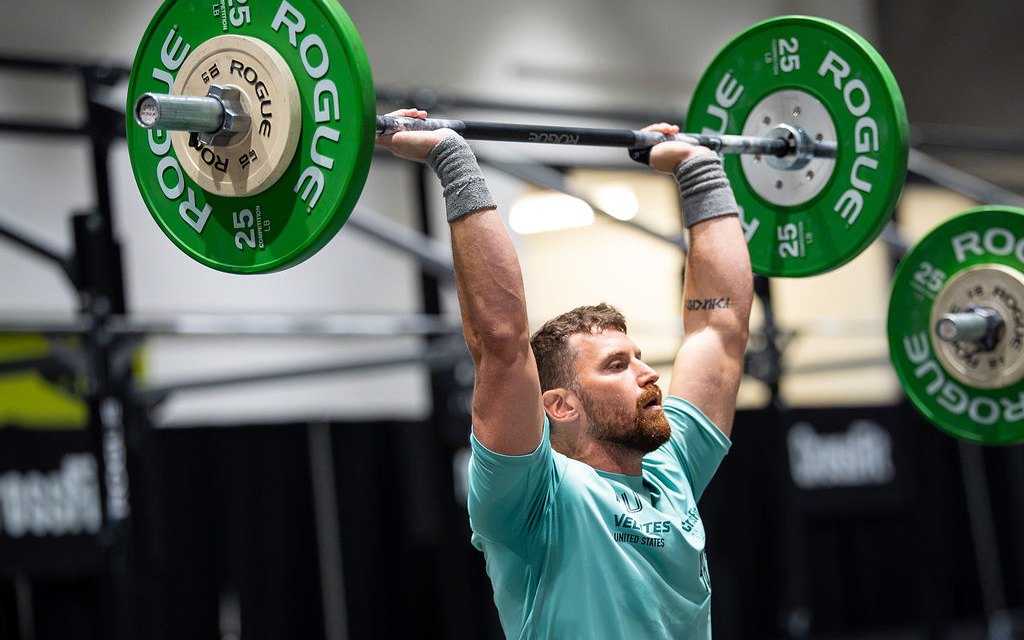
On a recent Ruth Performance Collective call, we started with one question: how can two reps performed with the same load create different training effects?
Imagine you just wrote one of the most common prescriptions in our sport for two different athletes:
5 x 5 back squat @ 70%.
Athlete A drops into the bottom and tries to explode out of the hole as hard as possible on every single rep.
Athlete B just likes to complete his training, get the green check in CoachRX, and move on to the next day, and maybe he leaves a comment that it "felt a little grindy today."
From a training quantification perspective, they did the exact same thing. Sets x reps x load gives us our training load, and there are whole software packages for strength and conditioning coaches built around quantifying exactly that.
The difference is that because Athlete A attacked every rep with maximal concentric intent, her relative power output was much higher, her average and instantaneous velocity was much higher, and the strength she built is going to transfer to a variety of sport movements much better.
(To be clear, I'm talking about CrossFit performance here, not hypertrophy or strengthening a specific position.)
Our prescriptions are incomplete
With traditional strength training, the prescription we typically give athletes only dictates the quantitative factors: the movement, sets, reps and loading. Sometimes we add a tempo like 30X1, but how many of your athletes are actually hitting that X, the concentric part, with the intent you want when you prescribe it? I think it's probably a pretty small percentage.
Across most of functional fitness, tempo gets used to prescribe a slow eccentric or a pause, not the kind of intent that's going to have maximal transfer and maximize strength gains.
I've reviewed dozens and dozens of coaches' training prescriptions at this point, and the most common strength prescriptions are far from capturing the whole picture. We're leaving a ton of potential adaptation on the table because we're not giving athletes the right kind of coaching cues to get the most out of their strength training.
Actual velocity vs intended velocity
With maximal concentric intent, load and velocity have an inverse relationship: lighter loads can be moved faster, and as load increases, movement velocity decreases. Near-maximal loads move slowly even when the athlete is trying to move them as fast as possible, and that last part is SUPER important.
That creates a distinction between actual velocity, how fast the bar moved, and intended velocity, how fast the athlete attempted to move it. A heavy rep can have low actual velocity and high intended velocity. A light rep has a range of possible velocities that depends completely on intent or fatigue, you could take a 45# barbell and press it really slow, or you could try to throw it through the roof.
Here's what that looks like in my own training, measured with a VBT unit:
- Bench press @ 295# (95% 1RM): 318 watts average
- Bench press @ 225# (73% 1RM): 580 watts average
- Thruster @ 165# (62% 1RM), just completing the reps: 728 watts average
- Thruster @ 165#, maximal intent: 819 watts average
Same load on the thrusters, different intent, and the second set was completed much faster. The percentage only tells us the intended relative load and the POTENTIAL for power development. It can't tell us whether the athlete moved with maximal intent, whether they maximized power output, or how much fatigue they accumulated across the set.
What the research shows
Two studies compared groups doing identical training where one group performed every rep at maximal intended velocity and the other deliberately used ~half of its maximal possible velocity:
- Maximal intended velocity training induces greater gains in bench press performance than deliberately slower half-velocity training (González-Badillo et al., 2014)
- Effect of movement velocity during resistance training on neuromuscular performance (Pareja-Blanco et al., 2014)
In 6 weeks of bench press training, the maximal-velocity group improved their 1RM by 18.2% versus 9.7%, and their velocity against the tested loads by 20.8% versus 10%. That is a massive difference.
In 6 weeks of full squat training using the same basic loading program at ~60-80% of 1RM, the maximal-velocity group improved their 1RM by 18.0% versus 9.7%, their velocity across all tested loads by 14.6% versus 7.5%, and their countermovement jump by 8.9% versus 2.4%. What's the most pure expression of power? The countermovement jump.
The effect on 20-meter sprint performance was unclear, and I think that's the most interesting part. Squatting and sprinting share components of energy system demands, but they share hardly any biomechanical demands, so this ties back to movement economy. Just improving peak and average power does not automatically improve someone's performance in the sport, there still has to be sport-specific work. Strength training done this way is raising the ceiling.
What this means for your athletes
Unless time under tension is the desired stimulus, like driving hypertrophy or pausing a front squat to build postural control, strength and power reps should generally be performed with maximal concentric intent. That applies even when the load is too heavy to move fast. On a heavy back squat, don't just go slow, try to drive up as hard as possible and jump out of the hole.
If you listen to people on social media, you'll hear "if someone doesn't have power, just make them stronger." But you can make someone stronger without improving their ability to express power. Have them go through the motions on 5 x 5 @ 80%, and they'll get stronger, but there's very limited transfer of that strength back to CrossFit performance.
As coaches, one of our roles is athlete education. Teaching our athletes the importance of moving with maximal intent, and how that transfers to their performance, is one of the keys to long-term athlete development.
Pull up the strength work you've written for this week and look at one prescription. Is there anything in it that tells the athlete how fast to move the bar? Do they know why it matters?
If not, that's your starting point.
-Kyle