Is There a System for Improving the Olympic Lifts in CrossFit?
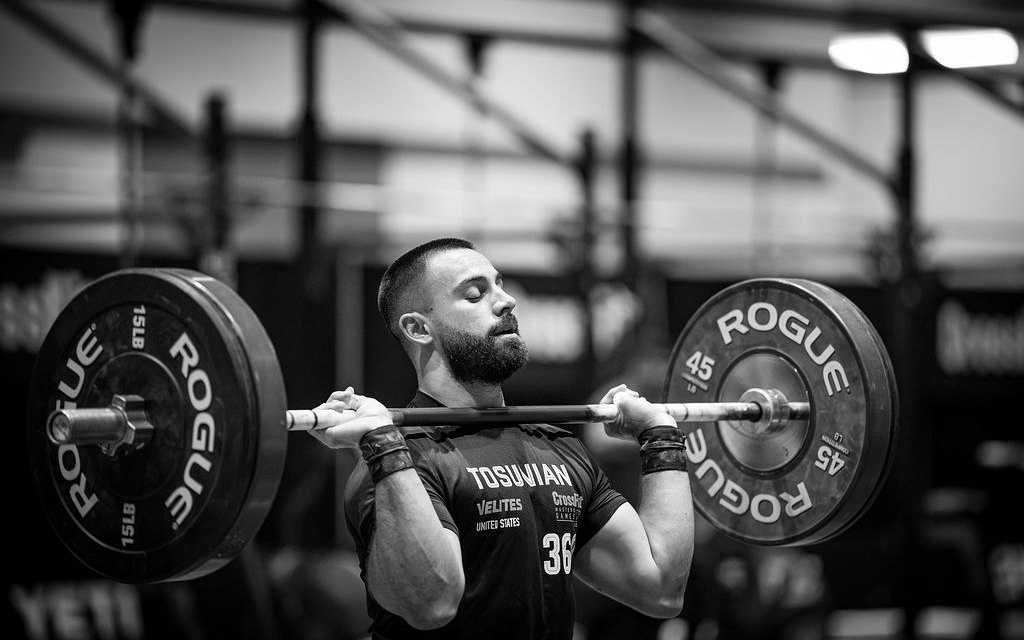
I have helped a lot of athletes snatch and clean and jerk more weight, and the route has been different for nearly every one of them. That is why I have never been able to write down a system for the Olympic lifts the way I can for a squat. I asked Ryne Sullivan if he had one, and he did not either.
"What you can do is create a very complex decision tree for Olympic weightlifting. But I don't think that there's some easy streamlined system for improving it because of how many things can elude the athlete."
Episode 7 is the two of us walking down that tree. It starts with how the athlete moves, goes through the strength numbers, decides whether the lift is even the problem, and ends in barbell cycling, where most of the fixes are breathing, setup, and grip.
Start with movement, with and without the bar
Ryne wants three things before he touches a program: how the athlete moves with no barbell, how they move with one, and where they sit on the strength speed continuum (how fast they are unloaded and lightly loaded, and how strong they are). He used himself as the example.
"You watch me do an air squat and compare that to a squat clean, my squat mechanics get better in a squat clean than they do in the air squat, which tells you that there's something left on the table on that end."
Movement quality is problem one in his hierarchy, but he keeps training the lifts while it gets fixed. "Even if it doesn't check out, we still have to practice these things because you can't go six to eight months while you're waiting on your ankles and your shoulders to open up to do any snatches or clean and jerks."
My first layer is the same. I watch a snatch and a clean and jerk, and I have yet to find a CrossFitter without technical work to do. That is the lowest hanging fruit in the whole process, and it has to come before any max testing. In 2011 I learned to snatch by building to a 1RM every session, hit 185, added weight for a couple of weeks, and then hired a weightlifting coach because I had no idea what I was doing. When athletes tell Ryne that so and so got good that way, he asks what those people have in common. "They are all at the pinnacle of the sport. Which means that they were gonna show up and figure it out one way or another."
The gap between the front squat and the clean
The next layer is ratios. I compare the front squat 1RM to the squat clean 1RM, because the gap tells me how well the athlete converts strength into the lift. If the gap is small, driving the front squat up will probably bring the clean with it. If the gap is big, the strength is already there and the time belongs on technical work.
I do not have hard numbers for this yet (I have the athlete pool to build them and have not done it). My working read is that a 20 pound gap is tight for a male athlete, and a female athlete will usually sit a little tighter because the loads are smaller. Ryne brought a number from weightlifting.
"Gayle Hatch used to talk about how he wanted the athlete's squat clean to be equivalent to their two RM front squat. So that's a metric to shoot for. CrossFitters are tough. It's probably gonna be more around the three RM mark if I had to guess for most people."
His reasoning is that weightlifters self selected into a sport that demands both strength speed off the floor and absolute speed under the bar, and that combination is rare in a CrossFitter. So a specialist benchmark needs turning back a little. It is the same problem as handing a CrossFitter a Jack Daniels chart and expecting the half marathon it predicts from their mile. I ran the speed retention index on the 2024 Games mile, the 2025 World Fitness Project two mile, and the 2026 World Fitness Project 10K, and those athletes look nothing like trained runners. Strength profiles will not match weightlifters either.
There are outliers in the other direction. My clean is 380 and my front squat is 385, because I am faster than I am strong. Ryne's follow up was where each number was set, and he made a point I had not considered.
"I tend to be more protective of speed than I am protective of slow strength. So my training one RMs in a back squat or a front squat or a deadlift will be closer to my competition one RMs than my snatch or my clean and jerk."
I had always treated the distance between an athlete's training max and competition max as one number per athlete. It can be a different number at each point on the strength speed curve, and I am the opposite of Ryne. I shy away from heavy slow strength and have never had trouble ripping a clean.
Is the lift actually the limiter?
Before any of this turns into training, the number has to be judged against the goal. I coached an athlete years ago with a 400 pound clean that was technically atrocious, and with the strength reserve he had over it, I had to ask what the point of training the clean was. Ryne filters the same way, against the long goal rather than this season's.
"I don't care if you're good enough to qualify for semifinals with this number, if your long term goal is to qualify for the Games. I'm looking at it with your long term lens in place."
What counts as good enough also moves every year. Ryne figures the field adds three to six pounds a year to the women's snatch and five to ten to the men's, though he thinks the men have mostly plateaued. When I coached Andre Houdet we kept running into this. "We would train to a benchmark and then we would show up somewhere and the benchmark was like tenth place." We stopped chasing benchmarks and settled on as strong as possible, as fast as possible, as many as possible.
The target depends on the rest of the athlete as well. Ryne's example was a man with a 235 pound snatch. If he runs a 17:25 5K, 275 is probably enough. If he runs 24 minutes, he needs something like 310 to offset the run. I said a woman with a 235 snatch and a 24 minute 5K is a clear call (leave the snatch alone and build the run), and Ryne pushed back on "clear" the way he always does, because he wants to know why the 5K is 24 minutes. An Achilles surgery changes the answer. My side of that argument is that I am going to keep looking for a way to solve it, starting with a zero gravity runner and some low body weight running volume to build tolerance. We agreed on more than it sounded like. Ryne's point was that 80 percent of the sport is still outside of running, and mine was that more 1RM snatch work for that athlete returns very little.
From there Ryne works top down. He checks whether the 1RM is good enough, then whether the athlete can repeat near it, and cycling comes last. If the first two are in place, light cycling is mostly sport specific work.
Isolated work has a minimum threshold too
This ties to the coaching filter I published in my Field Note on decision fatigue. Run a beginner through it and isolated methods still come out as the priority in competition season. An athlete who owns three strict handstand push-ups gets nothing from five rounds with ten of them in each. Isometrics, eccentrics, and some hypertrophy for lagging muscle groups will do more for them. Ryne has an athlete heading to Desert City Classic whose ring muscle-ups stay isolated right through the event, apart from a couple of mixed exposures.
"You can't get better at expressing it if you haven't gotten good enough to express something."
The same holds for a squat snatch Isabel done by someone who cannot squat snatch well yet. When he does start layering fatigue, he starts small, something like 30 unbroken double unders into 10 power snatches at 75 pounds.
What to look for in your own video
Undoing an ingrained pattern costs far more than learning it properly. Ryne said it can reach 45 minutes of snatch technique work in a day, which compromises the quality of everything after it. Athletes have to be able to review their own film, because otherwise they do forty reps, wait on the coach, and do thirty more with one change.
Snatch: do the hips rise first off the floor?
  The most common fault I see from quarterfinals to the Games.
  It usually ends in a miss forward or a hop forward.
Clean: does the bar float above the shoulder and crash?
  You pulled the bar up. Pull yourself under it and meet the bar at the shoulder.
Snatch turnover: elbows high and active.
  Ryne: the hips guide the bar path. The elbows pull you under it.
Jerk, side view: is the dip vertical?
Jerk, front or three-quarter view: do you dip faster than the bar?
  The bar floats, crashes, and the drive goes nowhere.
Split jerk: back foot lands first.
  Front foot first means misses forward above 80 to 85%.
Recovery: front foot half way back, then the back foot.
I asked Ryne how he picks between drills and cues. He asks the athlete. If a cue fixes it, that is easiest for everyone, and if they understand the cue but cannot find the position, he moves to drills. Drills only work for athletes who can connect what they feel to the full lift and who will tolerate the mundane. A proper sequence (positional pauses, slow pulls, paused lifts) is three pieces into a session before the athlete has snatched. Three 45 minute snatch sessions is 135 minutes of the week, and Ryne's question is what that did to the shoulders for ring muscle-ups.
Barbell cycling is breathing, setup, and grip
Ryne splits light barbell work three ways. He calls Randy barbell endurance, Grace and Isabel barbell cycling, and heavier repeated singles barbell repeatability. I only test the light end inside mixed work, and my standard is Open 20.1, because light barbell is almost never tested alone. Moderate loads (185 for men, 115 to 125 for women) I do isolate.
Ryne picks the test by the limiter, 20.1 for a breathing limited athlete and a power snatch and bar muscle-up couplet for a grip limited one. He had an athlete with small hands who finished top 300 worldwide in the Open and still placed around 130th in his region on that workout. He watches how it looks fresh and how it breaks down, and sometimes the answer is on the athlete's face, beet red five touch and go reps in without having taken a breath.
Touch and go work forces repeated breath holds, so it builds more CO2 than cyclical work at the same effort. When the bar drops, breathe fast and deep. Slow controlled breathing at that moment only delays the next set. Ryne's version: "Embrace the discomfort of fast breathing. You are working hard. You're supposed to breathe fast. It's okay. You're gonna be fine." On heavier singles he watches for athletes who brace and then sit in the setup for three seconds when one and a half would do.
Setup is where I spent a lot of time with Alexis. She would bend over, roll the bar to herself, and then lift. I timed how long she spent hunched across a workout and asked her to hold an unloaded good morning for that long. She did not need to try it to know what her back would feel like. My cue at any load is to stay standing until the moment you pick up the bar, then grab, brace, go. Half a second per rep across a hundred reps is 50 seconds.
Ryne adds that on light to moderate singles you can stop measuring thumb lengths. "Half a second per rep over the course of thirty reps in a field where there were fifteen finishers inside of forty seconds of each other, you just moved seven or eight spots by just grabbing the bar." That cue was the difference between one of his athletes making quarterfinals and missing them. In a group class none of this matters, and he would rather members move in whatever way keeps injury risk lowest.
Two methods we both use
After the day's heavy snatch or clean work
Hang clean, clean from blocks, hang snatch, or snatch from blocks
3 sets at 60 to 65%: 3, 3, 3+
From blocks, cycle singles as fast as you can reset
Stop the plus set when bar speed drops or you start to compensate
  With a VBT unit on a hang clean, my cutoff is 2.0 m/s
Most athletes get 7 to 12 reps
I use this in the off-season and fade it out as the season approaches. It builds rate of force development for the top end and carries over to moderate and heavy cycling, but the athlete needs the technical base first.
Ryne takes the hook grip away. A no hook snatch punishes anyone who rushes the bar off the floor, because it slides in the hands. For grip endurance he pairs no hook touch and go hang cleans with toes to bar behind a row or bike buy-in. My own grip work is direct hand strength (hex head holds) plus that same sport specific mix: farmers lunges, dumbbell power cleans, touch and go barbell, and lots of toes to bar.
ATHX as a CrossFit partner event
ATHX was named an official CrossFit partner event series this week, and I think it could be a real positive for the sport. It is a strength test, an endurance test of running and rowing, and a metcon in one session. The workouts are known ahead of time and the barrier to entry is low, so it works as a benchmark check-in while the season stays the big thing. Ryne's point was that right now an athlete from Boston takes three days off work to compete at Desert City Classic. If one comes to Atlanta next year, I am doing it.
Referenced in this episode
- The Performance Coaching Filter. The interactive filter I mentioned is inside my Field Note on decision fatigue. More Programming Options Don't Produce Better Programs
- Gayle Hatch. Head coach of the 2004 US Olympic men's weightlifting team and the source of Ryne's benchmark: squat clean equal to the front squat 2RM. For a published comparison, Greg Everett puts a proficient weightlifter's clean at 85 to 90 percent of the front squat. BarBend on clean to front squat ratios
- Daniels' Running Formula, Jack Daniels. The VDOT tables that predict longer race times from shorter ones, built on trained runners.
- Open 20.1. Ten rounds for time of 8 ground to overhead (95/65 lb) and 10 bar facing burpees, 15 minute cap. CrossFit Games
- Open 16.3. Seven minute AMRAP of 10 power snatches (75/55 lb) and 3 bar muscle-ups. On air we called this 17.3 from 2017; the power snatch and bar muscle-up workout was 16.3, in 2016. CrossFit Games
- Open 15.1 and 15.1a. Nine minute AMRAP of 15 toes to bar, 10 deadlifts, and 5 snatches at 115/75 lb, then six minutes to a 1RM clean and jerk. CrossFit Games
- Randy, Grace, and Isabel. 75 power snatches at 75/55 lb; 30 clean and jerks at 135/95 lb; 30 snatches at 135/95 lb. All for time.
- ATHX joins CrossFit as a partner event series, announced September 17, 2026. The full format runs about two and a half hours with warm-up and recovery zones: a 20 minute strength zone (1RM strict press, 3RM back squat, 5RM deadlift), a 30 minute run and row endurance zone, and a 30 minute metcon. The workouts stay the same all year. The Barbell Spin
Have a question about any of this, or a topic you want us to cover? The conversation keeps going inside Ruth Performance Collective, and I am in there every day.
- Kyle