Strength Is Specific
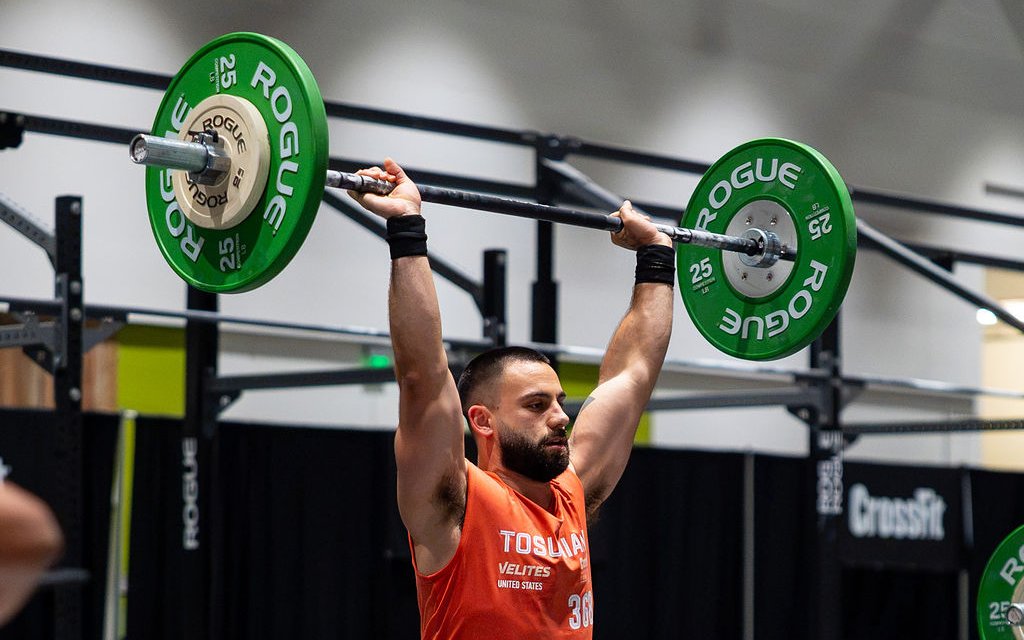
In the first Ruth Performance Collective education call, I asked every coach to write down their own definition of strength before the call.
The question we answered was: why doesn't improving general strength automatically improve sport performance? I think as coaches we all know this intuitively. There's never a situation where we improve someone's back squat and automatically see all of their barbell cycling improve in the sport, because absolute force generation is only one aspect of strength expression.
What do we mean by strength?
If you look up the definition of strength, it's typically defined as the ability to produce force. Research labs measure this with isokinetic machines, isolating a muscle group or a position and assessing force independently of the movement.
That's not a very useful definition for us as coaches, because sport performance depends entirely on our ability to express strength in a specific way. A HYROX athlete has to express strength pushing and pulling a sled, but they're also expressing strength in different ways during the wall ball and the lunge, even though those are low-load, repeated contractions, at their most fundamental they're still expressions of strength.
So I think we need a more functional definition.
Strength is specific to:
The movement and joint angle. Strength is gained through the range it's trained. If you're trying to improve someone's 1RM clean and you have them training back squats taken just barely below parallel, the transfer is going to be limited. You’d be better off using a full ROM front squats that hits the same bottom position the athlete is going to be in during the clean.
The velocity. The VBT research is clear over and over: slow, low-intent lifting improves your ability to generate force under slow concentric conditions, while fast, high-concentric intent lifting develops the ability to generate force quickly. Using things like squat cleans, thrusters, or TnG deadlifts at 65-70% while focusing on speed out of the hole develops the ability to move the bar at higher velocities which has more sport transfer.
The load. If you train heavy, you improve your ability to move heavy loads, and if you train moderate loads at controlled tempo, you improve that specifically. You need to choose your strength training methods intentionally.
The fatigue conditions. At the CrossFit Games in 2026 they tested the back squat after a grueling day at the Ranch. I compared the same athletes to the previous year, and there was nearly a 10% average reduction in their 1RM back squat. The impact of fatigue and environment is obvious, but it's overlooked in strength programming for mixed-modal athletes all the time.
Skill and coordination. I was recently performing a technical evaluation on thrusters for a handful of athletes who all had a common fault: the bar was floating off their shoulder in the drive phase. This reduced their ability to transfer speed and momentum into the bar. That's a skill issue limiting their top end strength, and potentially their thrusters under fatigue.
Side note: As coaches we’ve been yelling from the mountain tops how important technique, efficiency, and economy are, but if that message isn’t getting through we need to work on new ways to communicate it.
A higher force-production ceiling creates your potential, but it does not guarantee that you're going to be able to express it in all the various ways we see strength tested inside a CrossFit workout.
The strength-transfer chain
At the most fundamental level, we have general force capacity. When I think about testing force production I think about the simplest movement that controls the most variables: the leg press. When I was in graduate school, there was a leg press machine that I loved, simply because it was so stable that I could top out at just over 1,000 pounds (nice ego boost). However all that leg strength only had limited transfer to the movement I was actually interested in improving: a back squat. A leg press supports your spine, and gives you handles to hold providing all the stability you need. A high-bar back squat on the other hand, is axially loaded, needs a strong midline brace, and has to be stabilized in space. That's task-specific force.
Then there's force at the required velocity, because squat cleans move at very different velocities than back squats, and thrusters move at different velocities than front squats. As CrossFitters we need to be able to take 65-80% of our squat clean and be able to do it over and over again on a clock for max reps. Just making an athlete’s legs stronger is not going to automatically make them better at hitting squat cleans at the end of a metcon at 225.
Here's how I walk through the chain with a thruster:
General force capacity: front squat and push press, the force production ceilings for the thruster.
Task-specific force: the 1RM thruster, which shows us the gap between the front squat, the push press and the thruster.
Force at required velocity: peak force happens between about 1.8 and 2.2 m/s, right as the bar passes off the shoulder. Much slower than this the press-out strength requirements are too high for most athletes to finish the rep.
Force repeated under fatigue: max unbroken reps or repeated sets at about 40-60% of the thruster 1RM. In my opinion this is one of the most overlooked training strategies for competitive CrossFitters and we will explore this more in upcoming blogs.
Sport performance: sport-specific loading in metcons. If you want to get better at something in the sport, you have to test it and train it in the sport-specific environment. Period.
Find where the chain breaks
Strength transfer can break down at any link. For example: there are a lot more athletes who have the front squat and push press to support a 315/225# thruster than athletes who actually have a 315/225# thruster.
Each break points to different training:
| Transfer Breakdown | Training Interventions |
|---|---|
| They can't express force quickly | Speed front squats, sets of 3-5 at 55-75% as fast as possible, and deep-tier intensive plyos. |
| They can't coordinate force in the movement | Specific technical work, like keeping the bar resting on the shoulder until the last second, squeezing the glutes and punching through. |
| They can't access the positions | Deep-tier extensive plyos, loaded mobility work, and tempo work with a long pause in the bottom of a front squat or overhead in a press. |
| They can't repeat the output | Repeated thruster sets at 40-60%, muscular endurance work for the limiting muscle group, and engine development, because the aerobic system is what recovers you between barbell bouts. |
| They can't hold mechanics under fatigue | Two minutes at a ramping effort on an Echo, then a set of thrusters at 40-60%, stopping when they lose bar speed or position. Over time you're building a bank of well-executed reps at movement-specific speeds. |
This also tells you what you need to assess when you have an athlete with a strength deficit: everything from the basics all the way up to sport-specific.
Pick one athlete whose "strength problem" you're working on this week. Which link in the chain is actually breaking?
-Kyle