You Don't Rise to the Occasion on Competition Day
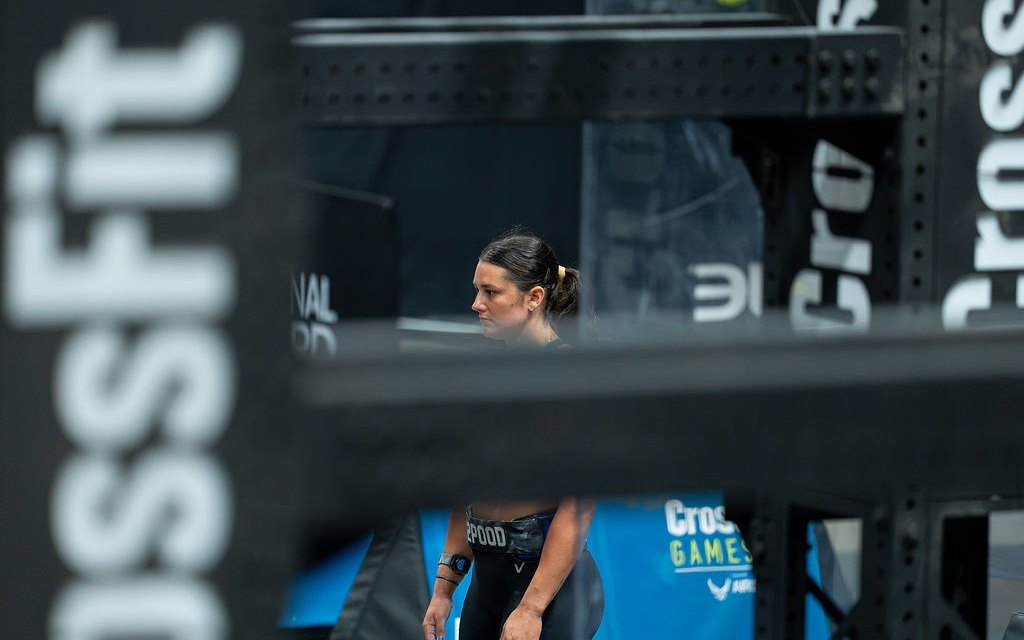
"You don't rise to the occasion, you fall to the level of your preparation."
Most of my athletes finished competing this weekend or next, and the true off-season is about to start. So Ryne Sullivan and I spent episode 13 on the competition weekend itself, and how to get the most out of an in-person event. Most of it is decided before you get to the venue.
There is no such thing as a breakthrough performance
I had this conversation with a client back around 2018. "As an observer, you see the breakthrough performance happen on the floor. And you're like, my God, they came out of nowhere. But there was a lot of work put in leading up to that point."
That work is periodization, which the coaching world loves to talk about. "The reality of what periodization really is, is that you have a period of time where you focus on building your limiting qualities. But then you have the performance phases, the next period, and that's learning to take all those components that you've improved and actually using them in a sport-specific setting and getting used to all the variants." Ring muscle-ups after GHD sit-ups when your midline is fatigued. Ring muscle-ups after a pile of drag rope double-unders when you can't feel your triceps. Ryne's version: it's "a longer word for planning." You have to be competent, and then, as he put it, "you also have to be confident in your competence."
The mental side needs reps too
Jeremy Meredith taught the Collective this week on perceived fatigue. Performance fatigability is the measurable part: output drops interval after interval when the rest is too short. Psychological fatigue is the other side of the coin. When your brain sends a signal to the muscle, it sends a copy of that signal to the part of the brain that perceives effort, and as the set gets heavier so does the copy (the study is below). "We need to get people to the point when they're preparing for competition that those two things match up."
That's why the mental side has to be practiced. "A lot of athletes make the mistake of thinking, when I show up on game day, I'm gonna be able to focus." In training they get lost in work, in what other people are doing, in what they saw on Instagram, and they expect focus to arrive because it's a competition. "A lot of people don't spend the time repeating the mental performance tools over and over and over enough. They don't get that repetition in training."
Ryne ran group sessions with the clock starting at eleven o'clock, ready or not. "If you can't get your shit together when you have all day and no restrictions around warm-ups and nothing else going on, what makes you think that you're gonna be able to do it at a competition where the warm-up area is tight and where everything else is chaotic?" Those are the same athletes scrambling on competition day, halfway warmed up because they ran back to the rental car for a piece of equipment.
Every mental performance coach I've worked with recommends a checklist, so those details come out of your head. "Here's my checklist, I got my belt, got my carbs, I got my grips, I got my own personal chalk because there's never enough chalk in the warm-up area, and now I'm good to go." Ryne adds three kinds of grips, because they interact differently with each bar and ring, and more than one pair of shoes, because a rope climb in running shoes shreds them.
Plan every part of the day
Everything starts with a plan, and every day of the weekend should have one.
What goes in the day plan
What time you arrive at the venue
When your warm-up starts, and what it is
How much time you'll spend in the corral, and what you do there
When you eat, and what
Fueling is where Haley comes in for the CrossFit athletes she works with, and most of that work happens a month or two out. "You're testing different carb sources 90 minutes or 60 minutes before your event. You're testing post-workout stuff to see how your gut handles it." Left to their own devices, most athletes try new foods, new supplements, the electrolyte sample they got handed at check-in, "and they end up with explosive diarrhea." Those are all things that have happened to athletes I coach.
Not everything works for every person. The electrolyte drink that works for Ryne on almost everything is straight diarrhea for me, and Haley's honey packets for her 50K had me burping through tempo intervals. You only learn this by testing it early and on purpose.
Caffeine is the same, and that's what the post-comp reflection is for. "I don't need a lot of caffeine on competition day. Just absolutely minimum. I might drink like a quarter of a cup of coffee throughout the whole day, where normally I'll have two coffees." If you don't make the note and change it next time, what was the point of gaining the experience?
Tell your coach before the event
Set your success markers before you go, comparative or internal, and talk them through with your coach. The same goes for problems. Most of what happens to an athlete on game day, I've either navigated myself or helped someone else navigate: gut distress, not sleeping, all of it. "I have solutions for every one of those, but it's so common for them not to talk about them until after the event." If I'm not there, it's a text message away.
Stay in your lane in the warm-up area
Ryne watched this at Desert City Classic last weekend: athletes who looked like they had a plan, until they saw someone with a band and asked to borrow it. Flexible is fine. You never know what equipment the warm-up area will have, and at the Games you have no choice: no yoke, no blocks for deficit handstand push-ups, so double dumbbell shoulder press and hope. "But being flexible and just doing what you see everyone else doing are two very different things." At the Legends semifinal this year a guy told me he was going to do my warm-up because I was doing well at the comp, and followed me rep for rep.
Ryne's counterexample was Liz Wishart, who warmed up very differently from almost everyone around her, stuck to it with the blinders on, and by his account won. She's an enduring athlete on the smaller side, so she spent a lot of time breathing heavy. His own athlete that weekend is thick and powerful, and warmed up that aggressively she'd arrive on the floor fatigued. "You almost have to massage the powerful athlete into their warm-up." I'm on the power side myself: very low intensity aerobic work, a foam roller or a stick to get the muscles loose, and nothing that builds metabolic heat, because the thicker the athlete, the more they overheat on the floor.
This is why the warm-up planner is big and bold in the pre-competition manual I finished a few weeks ago, which is about 22 years of what I tell my athletes on a regular basis. For athletes with less competition experience I'll build the warm-up with them, they test it in training, and we go back and forth. "The better and more detailed your plan, the easier it is to keep the blinders on when you're not in the actual event."
Watch the early heats, then change the plan
Ryne gets to the venue early and watches the early heats, and at Desert City one of his planned strategies turned out to be "a strategy for failure." Nobody having success in that event was doing it, so he went back to the warm-up area and changed it.
He calls that race psychology. Picture a 400 m run into a 20-yard dumbbell lunge and a handstand walk back, three rounds. If the early heats are flying through both unbroken and you let the field get 100 m up the track, "you have no chance of catching back up." You'll positive split, and it won't feel like a well executed race. "You have to stay connected with the field to feel like you have a chance, because the fatigue is going to set in one way or another."
Chippers are the other place I always make a point to watch. Sometimes tens on a 30-pound wall ball, which looked right on paper, is too conservative once you've seen two heats. And sometimes the trap runs the other way. The Legends chipper this year was toes-to-bar, wall ball, box jump-overs, heavy devil's press, heavy dumbbell walking lunge. "The person who was leading after the box jump-overs was never the person who won the workout." I had a hunch, and after the two heats before mine I knew what I wasn't doing.
Ryne's Desert City example was 10 ring muscle-ups, 20 dumbbell hang cleans, 30 box jump-overs, 40 toes-to-bar, then max calories on the Echo bike until the 10-minute mark, and start over. The plan was 5-5 on the rings and 8-7-5 on the hang cleans. Then he watched nobody get back to the bike with more than two or three minutes left in the second round, so the breaks came out.
That was event two, after the swim, and that matters. "Even in testing, you're not quite going at the same effort that you are in competition. Maybe you're close, but you're not quite there. And the stress of competition makes your body react to everything a little bit differently." You can watch everyone else, see that they aren't recovered, and adjust up or down. So the principle is: when you're competing, be flexible. Have a plan A, a plan B, and a mindset that it might all go off the rails.
Don't spoon-feed the strategy
Which is why, as coaches, we can't hold athletes' hands too much in training. "If I give you a row target and a breaking target for the toes-to-bar and a breaking target for the hang power snatches, that's my best guess about what you will be able to do in that moment. And my best guess about what you will be able to do is probably further off from your best guess. And if it's not, then that means you need to develop your athlete IQ." The way to build it is to come up with a strategy, try to execute it, fail, and reflect on it. An athlete told me recently I should have told him to do a workout in singles. "If I spoon-feed that to you, I'm basically handicapping you. I'm making it so you don't ever learn to look at a workout and figure out this should be singles for me, or this should be touch-and-go."
Travel, recovery and the hotel room
The other place my athletes make mistakes is travel. Flying or driving a long way the day before a comp leaves your legs rough. Compression tights and socks on the travel day help (the study is below), and so does drinking enough on the plane, because airplane air is very dry.
Between events, the job is to get back to baseline as fast as possible. "You got to think about, what are all the things that are gonna be disturbed by the workout?"
Back to baseline, between events
Come off the floor hot: cold tub
Blood pooled in the calves and quads: get on the table and get it flushed, then sit on the bike to move blood back in
Loud music and bright lights wear on you: get outside into daylight, or back to the room with the lights down
Over six or seven events it's critical. The athlete who doesn't take care of themselves does well in events one and two, tanks a little in event four, and is wrecked on the last day. The athlete with a little less fitness who recovers well every day beats them.
I like a dark, cold room for a while after every event. Pick the hotel for your needs rather than the one closest to the venue. I take a sleep mask everywhere. Ryne can't stand anything on his face, so he travels with chip clips for the curtains that never close.
The one-percenters
For athletes who have the basics dialed, there are smaller things: exhale breath-hold work in the warm-up for CO2 tolerance (there's more nuance to it than holding as long as you can, and that part stays with my athletes), and BFR in competition warm-ups, which we covered two episodes ago. Both require practice in training first.
Mental rehearsal is one a lot of people miss. I used it extensively as a swimmer and carried it into CrossFit, where the events are announced a week out, five days out, sometimes an hour out. "If you have a fairly high athlete IQ, you're gonna know how each step of the way is gonna feel, how your body's gonna respond. You need to walk yourself through that as much as possible." Ryne's warning: don't rehearse only the easy parts. The last set of nine bar muscle-ups in a 21-15-9 doesn't feel like 15 unbroken fresh.
And decide beforehand how you'll respond when a no-rep happens, or when you miss a clean and jerk. Anyone who has competed knows the spiral: two no-reps on pistols, then a third, and the workout falls apart. "You can decide how you're going to respond to those things beforehand and then not get the emotional spiral."
That extends to the people with you. If your support group meets you off the floor with "that judge wasn't fair to you," all it does is keep you focused on what has already happened. Ryne tells his: I just need you to be my family. That's why I love taking my kids. The moment I'm off the floor, they want to ride scooters and get food, and we don't talk about the competition whatsoever.
Referenced in this episode
- Perception of effort and the copy of the motor signal. de Morree HM, Klein C, Marcora SM. "Perception of effort reflects central motor command during movement execution." Psychophysiology 2012;49(9):1242-1253. 16 recreationally active men lifting 20% and 35% of 1RM with a fresh and a fatigued arm: rating of perceived effort, biceps EMG and the movement-related cortical potential all rose with load and with fatigue, and perceived effort correlated with the cortical potential. The authors call it direct neurophysiological evidence that perception of effort tracks central motor command.
- Compression socks for travel. Broatch JR, Bishop DJ, Zadow EK, Halson S. "Effects of Sports Compression Socks on Performance, Physiological, and Hematological Alterations After Long-Haul Air Travel in Elite Female Volleyballers." J Strength Cond Res 2019;33(2):492-501. 12 elite female volleyballers flying Canberra to Manila, six in compression socks and six without: better heart rate, oxygen saturation, alertness, fatigue and soreness during the flight, and small to moderate improvements in countermovement jump height and velocity 24 hours after landing.
- Jeremy Meredith's Collective call on perceived fatigue (Managing Fatigue, week 3), inside Ruth Performance Collective.
- The Comp Week Manual, my free pre-competition manual with the warm-up planner and the event-plan worksheet: kyle-ruth-coaching.kit.com/compmanual.
- Haley Ruth Nutrition, for the carb and electrolyte testing that happens months out: kyleruthcoaching.com/nutrition.
- Two episodes ago: BFR Training Isn't Just for Elite Athletes.
Inside Ruth Performance Collective, the Managing Fatigue series closes this Tuesday with week four: the interference effect is overrated.
- Kyle