Does Cardio Kill Your Strength Gains?
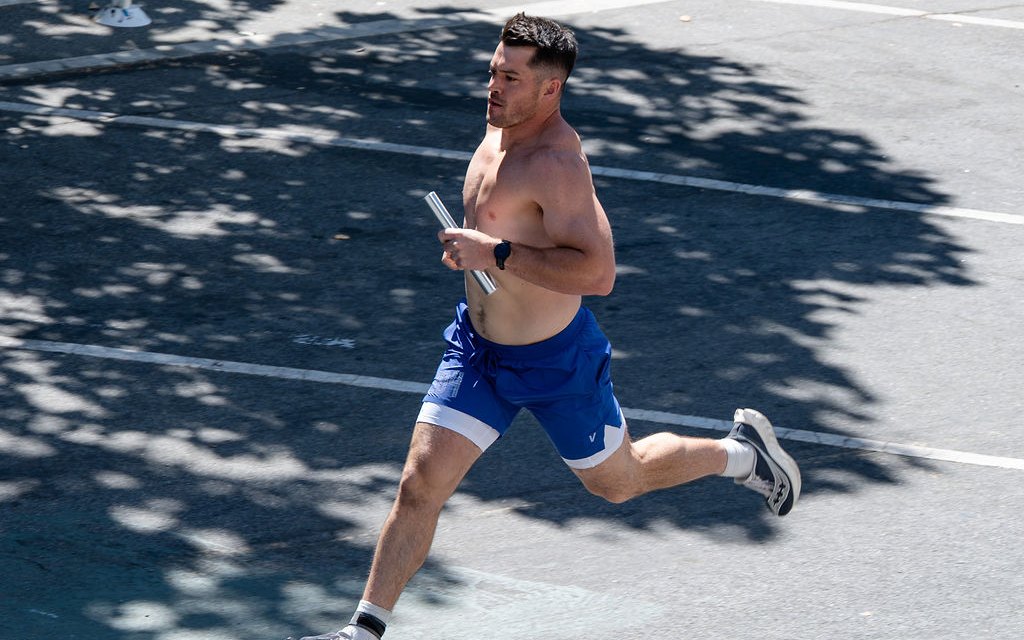
On a recent Ruth Performance Collective call, we wrapped up the fatigue discussions we've been having for the last few weeks with what I think is one of the most common misconceptions in the training space: the interference effect, or the idea that you can't lift heavy, build speed and power, and build endurance simultaneously.
The short of it is that yes, the interference effect does indeed exist. However, with good programming principles, it’s pretty minor.
Where "cardio kills gains" came from
The old story was that conditioning turns on endurance genes that block the signal for muscle growth, and that's partially true. Endurance training activates an enzyme called AMPK (AMP-activated protein kinase), which turns off mTOR (mechanistic target of rapamycin), a key signal that drives muscle growth. That's where the idea that cardio kills gains came from, and most of the support for it comes from rodent and cell studies.
In humans, the research shows something a little bit different. There is very little evidence that AMPK directly blunts muscle protein synthesis, so it doesn't automatically kill your hypertrophy gains. The better explanation is that residual fatigue and total workload are what can potentially impact your strength, power, and hypertrophy adaptations.
So the entire thing comes down to being a programming problem, not a physiology problem. If you just look at CrossFit or even HYROX as a sport, there's observational evidence that strength and endurance can be built simultaneously pretty dang well. The issue is the way people combine endurance training and strength training. That's what blunts those adaptations.
Here's this part of the call on video:
What's at risk
When you add conditioning to a strength program, max strength takes a small, almost trivial hit. There is almost no measurable impact on muscle size, which makes sense when you remember that you need fatigue to drive hypertrophy. Aerobic capacity actually improves when you perform resistance and endurance training concurrently. The one quality most at risk is power. For both males and females, it consistently takes the biggest hit during concurrent training, but the effect is still pretty small.
Spacing
The more hours between strength and conditioning, the less either one is impacted. With 0 hours, you're likely to see power, jump and max strength adaptations significantly impacted, while you still see improvements in VO2 max. Once we go to 3 hours, power and jump adaptations are protected, and by 6 hours we see almost matched adaptation.
So when someone asks, "How long should I rest between my AM and my PM session?", the evidence-based answer is 6 hours. For conditioning, separating your strength work completely from your conditioning work (24 hours apart) resulted in the best adaptations.
I default to AM/PM doubles whenever someone has them available, and I separate strength from conditioning work. It's not always possible. High-level CrossFit athletes have to get metcons, conditioning and strength packed into a day, so sometimes you're doing strength work and a metcon in one session, and then 4 hours later you're doing your conditioning work. Are you maximizing your adaptations in any one of those things? Probably not. But you are training for the sport.
It also depends on where you're at in your season periodization. In limiter phases, when your goal is to drive adaptation, create as much separation as you possibly can. As you get closer to the season and shift into bridge or performance phases, the demands of the sport require training to be combined. At that point, shoot for separation between key sessions somewhere in the 3 to 6 hour range.
Put the priority first
When strength, power, or speed is a priority, it goes before any conditioning that uses the same muscle groups. Doing conditioning work beforehand blunts strength performance, and over time it ends up blunting strength adaptation, because athletes are not lifting as heavy, so they're not getting the same neuromuscular stimulus.
When conditioning is the priority and volume is high, you know that strength expression is going to be masked by fatigue, and athletes are going to feel weaker. I always encourage them not to stress over it. Once we remove the fatigue, they'll be able to express the strength that they do have. So for these athletes, if conditioning is the priority, it goes in the AM session, with the understanding that strength will feel blunted during the off-season.
The fatigue is local, and the dose matters
The fatigue that blunts strength, power and speed is local. If you have someone on a bike pounding their legs and their priorities require strength work in the afternoon, do upper body strength work. In the research I reviewed for the call, leg press reps were down 4 and 8 hours after cycling intervals and back to normal at 24 hours, but bench press was unaffected.
How long the fatigue lasts depends on the dose of the conditioning (think duration × intensity). A short interval piece clears in hours, but a big conditioning dose is going to affect strength for longer.
It runs both ways
Short term, lifting also negatively impacts conditioning. If you do a heavy squat session and shortly afterward try to row a 2K, there's going to be some negative impact on that time trial. One 6RM leg session raised the energy cost of running for up to 24 hours (Doma et al., 2019), and one lifting session can lower endurance quality for hours, up to days (Doma et al., 2017). The caveat is that these were endurance athletes new to lifting, so experienced lifters probably see a smaller residual impact.
Long term, lifting can actually make your engine better, because it improves running and cycling economy. So when you have a key run, like a tough threshold run or a 5K time trial, anticipate the fatigue from your strength training. If you need to squat heavy and then run a 5K the next day, monitor your fatigue during the squat session (with VBT!).
Modality and body segment
Muscle damage from the conditioning matters more than the machine. When the research compares the impact of conditioning on strength with participants on the treadmill or bike, there's very little difference between the two. However, when they increase the eccentric component with downhill running, there's a much bigger impact on strength adaptation. If an athlete needs strength and power adaptations, use the lowest eccentric load conditioning modality that still applies to their sport: the bike or the rower for most athletes, or the SkiErg or swimming if they really need to isolate lower body strength adaptations.
Then put the conditioning on a different body segment than the strength you're building. Run in the AM and do upper body strength and gymnastics in the PM, and there's way less of an impact on that strength session. It works the other way too: pair upper body conditioning (swimming, SkiErg) with your lower body strength work. This is the perfect layout for the off-season.
As I was prepping for this talk, it got me taking a critical look at my own athletes’ training templates. I know that there are elements I can improve and conversations I can have with my clients about spacing between sessions. The advantage to continuous learning is that you will always find places to upgrade your systems.
Coaches, pull up some of your athletes’ templates and take a critical look at how training is spaced throughout the week. How many hours sit between the strength work and the conditioning, and is the conditioning loading the same body segment you're trying to get stronger? If we know we can do better, we need to do better.
- Kyle